The Agentic Shift: Beyond Chatbots in Business
AI Strategy, Agentic AI, Enterprise Automation
The Agentic Shift: Why Your Business Needs More Than Just a Chatbot
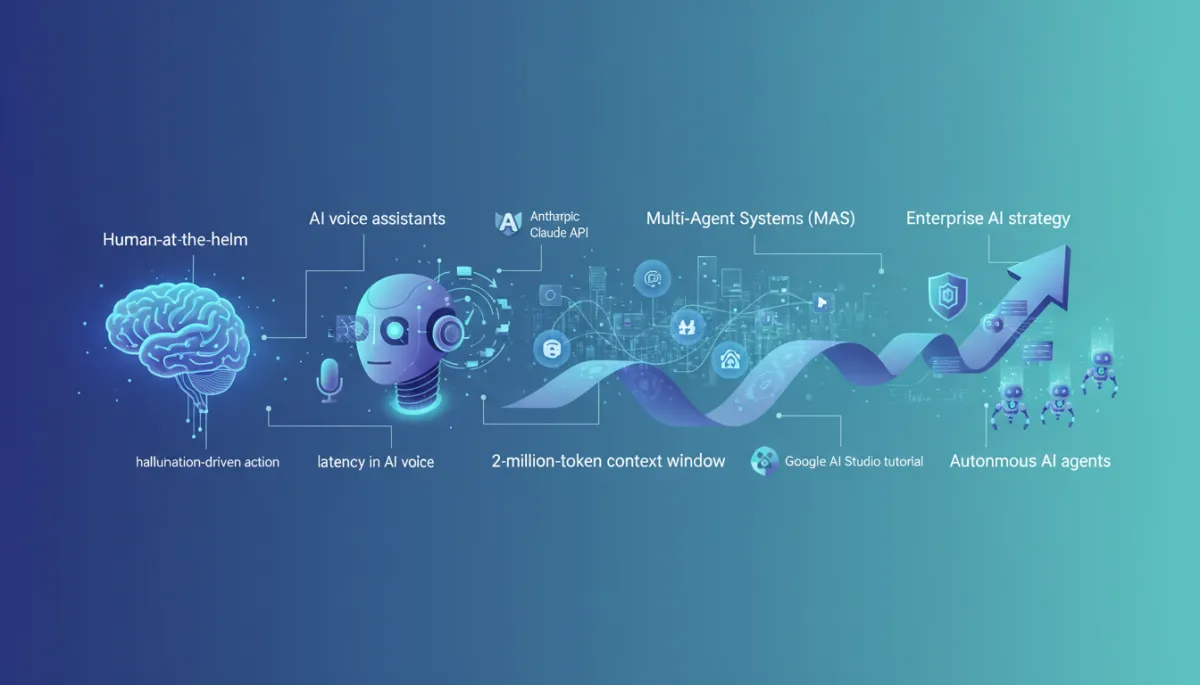
Chatbots answered FAQs. Agentic AI executes real work. If your enterprise AI strategy still revolves around a single conversational widget on your website, you’re missing the real transformation: autonomous AI agents and Multi-Agent Systems that can reason, coordinate, and take action with a human-at-the-helm.
From Conversational AI to Agentic AI
Traditional conversational AI focused on dialogue: answer a question, route a ticket, surface a knowledge-base article. That’s useful, but it doesn’t fundamentally change how your operations run. The agentic shift is about giving AI the ability to plan, decide, and execute multi-step tasks across your stack—while still keeping humans firmly in control.
Modern models such as Claude 3.5 Sonnet via the Anthropic Claude API and Google’s latest Gemini family through the Google Gemini API are built for this new era. They support long-horizon reasoning, tool use, and integration into complex LLM workflows, not just single-turn chat. When you orchestrate them as Autonomous AI agents inside a broader architecture, they stop being chatbots and start becoming digital team members.
Human-at-the-Helm: Control, Not Chaos
The phrase human-at-the-helm captures the mindset leading businesses are adopting. Agentic AI should propose, plan, and execute—but only within guardrails you define and with human oversight where it matters most: money movement, compliance, reputation, and safety.
This is especially critical in a world where large models can still hallucinate. A casual hallucination in chat is annoying; hallucination-driven action—like issuing refunds, changing pricing, or sending the wrong compliance notice—can be catastrophic. Agentic systems must therefore combine strong reasoning models, explicit policies, and approval steps so that AI executes confidently but never blindly.
💡 Key Takeaway: Agentic AI isn’t “set and forget.” It’s about designing workflows where AI handles the heavy lifting but humans own the final say on high-impact decisions.
Why Context and Coordination Matter More Than Ever
The real power of today’s models lies in context. With a 2-million-token context window now available in leading systems, your agents can “remember” entire product catalogs, multi-year customer histories, policy manuals, and even past conversations in a single session. That’s the difference between a chatbot that answers “What’s my order status?” and a system that can proactively diagnose chronic delivery issues across regions and suggest operational fixes.
But no single agent can or should do everything. Multi-Agent Systems (MAS) allow you to break complex work into specialized roles: a research agent, a pricing agent, a compliance agent, a customer-facing agent. They communicate, negotiate, and hand off tasks—much like a cross-functional team—while your governance layer enforces business rules and auditability.
Beyond Text: AI Voice Assistants and Latency Reality
Customers increasingly expect to talk, not type. AI voice assistants on the web, in apps, and in call centers are becoming a core part of modern customer journeys. Yet delivering a great experience isn’t just about natural language; it’s about engineering away friction—especially latency in AI voice.
In a text chat, a two‑second pause is tolerable. In a live call, it feels awkward and unprofessional. When you connect agentic backends powered by Claude 3.5 Sonnet or Gemini models to real-time voice, you need streaming responses, incremental reasoning, and smart turn-taking so the conversation feels fluid while agents still perform non-trivial reasoning and tool calls in the background.
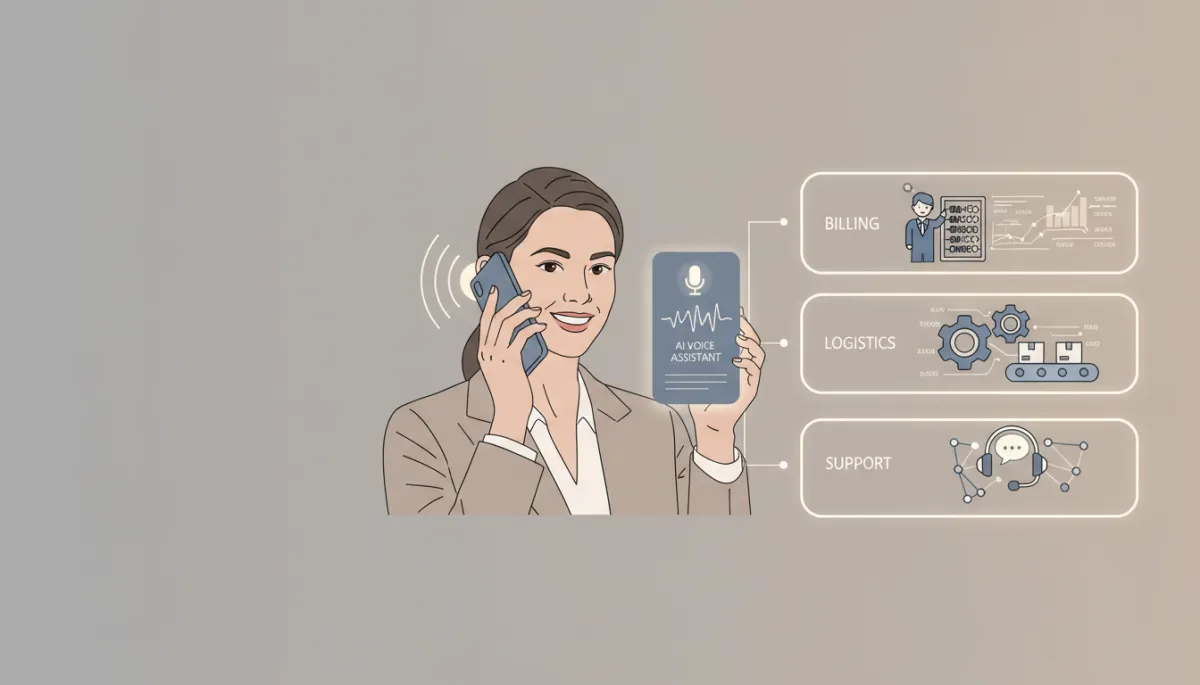
Voice-first experiences shine when agentic backends quietly handle complex, multi-step work.
Building LLM Workflows with Claude and Gemini
For agencies and enterprises, the practical question is: how do we actually build this? The answer lies in robust LLM workflows that treat models as components in a larger system, not as one-off API calls.
With the Anthropic Claude API, teams are wiring Claude 3.5 Sonnet into orchestration layers that manage tools, memory, and approvals. Similarly, a Google AI Studio tutorial is often the starting point for teams exploring the Google Gemini API—showing how to connect Gemini models into apps, configure spend caps, and safely expose capabilities to end users. From there, engineering teams extend prototypes into production-grade agentic systems that talk to CRMs, ERPs, and internal services.
The pattern is consistent: define tasks, break them into stages, assign them to specialized agents, and orchestrate their collaboration. Conversation—whether via chat or voice—is just the front door. The value is in what happens behind it.
Rethinking Your Enterprise AI Strategy
For business and agency leaders, the implication is clear: your Enterprise AI strategy can’t stop at “we launched a chatbot.” You need a roadmap for Agentic AI and Autonomous AI agents that:
Targets high-value, repeatable processes—claims, onboarding, sales ops, support triage—where agents can own end‑to‑end execution.
Embeds human-at-the-helm oversight, with clear escalation paths and transparent logs of agent decisions.
Leverages both text and Conversational AI voice channels, tuned for latency, accuracy, and brand tone.
Uses platforms like the Anthropic Claude API and Google Gemini API in a governed, cost-aware way, with monitoring and safety baked in from day one.
The Next Competitive Edge
The agentic shift is not a buzzword; it’s a structural change in how work gets done. Businesses that move beyond basic chatbots toward coordinated, well-governed agent ecosystems will see faster cycle times, richer customer experiences, and new products that simply weren’t feasible before.
The question for your organization isn’t whether to adopt conversational AI—it’s whether you’re ready to let AI do more than talk. With human-at-the-helm design, robust LLM workflows, and the right mix of Claude, Gemini, and other agentic platforms, your “chatbot project” can evolve into a true AI-powered operating layer for your business.
