
Master Claude AI: Key Skill for 2026 Success
Future of Work, AI Skills, Claude AI, Albany Contractors
Come to the Table Ready: Why New Hires Must Know Claude AI to Win in 2026
In 2026, AI fluency isn’t a “nice to have” anymore—it’s the new baseline. For contractors, business owners, and ambitious new hires in Albany, NY, knowing how to work with Claude AI is quickly becoming the competitive edge that decides who gets hired, who gets promoted, and which companies win the best projects.

1. The Hiring Landscape Has Permanently Shifted
Over the past two years, the hiring market has quietly rewritten its rules. Across industries—from tech to construction management—leaders are no longer asking, “Do you know AI?” They’re asking, “How do you use AI to make us faster, smarter, and more profitable?”
For new hires, AI Fluency—the ability to confidently use tools like Claude AI in real work—is now a core part of workforce readiness. It sits right alongside communication, problem-solving, and reliability. If you’re walking into an interview in 2026 without AI skills, you’re coming to the table unprepared—especially when your competition is using Generative AI as a force multiplier for everything from research to reporting.
2. The AI Skills Earthquake: The Numbers Are Brutal
McKinsey’s 2025 workforce research describes what’s happening as nothing less than a skills earthquake. In just two years, demand for AI fluency exploded from roles employing about 1 million workers to 7 million—a nearly 7x increase. Job postings that mention AI grew by more than 130%, while overall job postings crept up only about 6%.
The World Economic Forum’s Future of Jobs 2025 report backs this up: by 2030, 39% of core skills in the average job will have changed. In roles heavily exposed to AI, the mix of skills employers want is shifting 66% faster than in less-exposed jobs. That means the job you’re hired for in 2026 will not be the job you’re doing in 2028—unless you’re learning and adapting with AI as you go.
3. Claude AI: The Enterprise Gold Standard
When employers talk about Enterprise AI in 2026, Claude AI is at the center of the conversation. Eight of the Fortune 10 are now Claude customers. They’re not dabbling—they’re rebuilding workflows around agentic AI that can reason, plan, and act alongside humans in real time.
Look at the numbers:
- HUB International rolled out Claude to 20,000+ employees, reporting 85% productivity gains, an average of 2.5 hours saved per week per employee, and over 90% user satisfaction (HUB International / Anthropic, Feb 2026).
- Across pilot programs, Claude has cut average task completion time from 3.1 hours to 15 minutes—a 92% reduction for common knowledge and documentation tasks.
- PwC is training 30,000 staff on Claude agents, while Cognizant has equipped 350,000 employees with Claude access for daily work.
When that level of investment happens, hiring expectations follow. If the world’s biggest employers are all-in on Claude, they’re going to expect New Hire AI Skills that match. Being comfortable with Claude’s prompt engineering, agentic workflows, and human-AI collaboration isn’t extra credit—it’s table stakes.

Workers who show real AI aptitude are moving up the ladder much faster.
4. The Wage Premium: AI Skills Beat Extra Degrees
The PwC Global AI Jobs Barometer 2025 makes the money side crystal clear: workers with AI skills earn a 56% wage premium over peers in the same role. That’s more than double the premium reported just a year earlier. Lightcast’s AI Skills Report adds that job postings asking for AI skills pay about 28% more—roughly $18,000 extra per year on average.
Wages in AI-exposed industries are growing at 16.7%, compared with 7.9% in less-exposed sectors. Put simply: learning Claude AI today is delivering a stronger near-term wage boost than many Master’s degrees. For new hires who invest in upskilling and AI literacy, the wage premium is real and accelerating.
5. What Employers Want in New Hires (and Say Out Loud)
The Microsoft/LinkedIn Work Trend Index surveyed 31,000 people across 31 countries. The message from hiring managers was blunt:
- 66% of business leaders say they will not hire people who lack AI skills.
- 71% would rather hire a less experienced candidate with AI skills over a more experienced one without them.
- By 2026, the NACE Job Outlook projects that 1 in 3 entry-level jobs will explicitly require AI skills, and AI-related job postings are up about 70% year-over-year.
Zapier’s CEO put it best: “For us, being capable is the bar. You have to be at least that to get hired.” In 2026, “capable” increasingly means AI fluent. That’s true in software, professional services, and yes—even in contracting businesses that run on tight margins and fast decision-making.
6. What AI Literacy Really Means in 2026
AI Literacy isn’t about becoming a data scientist. It’s about being a smart, responsible power user of tools like Claude. At ResProAI, we break AI literacy into four core competencies:
- Awareness – Understanding what Generative AI and agentic AI can and can’t do. Knowing Claude’s strengths (summarizing, drafting, analysis) and its limits (outdated data, hallucinated facts).
- Application – Using AI in real workflows: building checklists, drafting emails, analyzing job cost data, generating safety briefings, or turning field notes into clean client updates. This is where prompt engineering and designing simple agentic workflows come in.
- Adaptability – Staying curious as tools evolve. New Claude features roll out constantly; AI-literate workers keep experimenting instead of clinging to last year’s habits.
- Accountability – Practicing critical thinking about AI output, checking facts, and knowing when to override or ignore AI suggestions. Responsible use—including privacy, safety, and compliance—is part of real AI aptitude.
When you can show these four competencies with Claude AI, you’re not just “using a tool.” You’re demonstrating that you can drive workforce transformation and unlock real productivity gains.
7. The Contracting Angle: Why This Matters in Albany, NY
Contractors in Albany and across upstate New York often ask us at ResProAI, “Isn’t AI just for tech companies?” The answer: your field crews might be insulated, but your office is not. The trades still require hands-on skill, but the business side of contracting is being transformed by Claude AI right now.
- Faster bids and proposals: New hires can feed Claude project notes, scope details, and past estimates to draft accurate proposals in a fraction of the time—then refine language to match your brand and risk tolerance.
- Automated client follow-ups: Claude can generate polite, professional follow-up emails after site visits, progress updates during long jobs, and reminders about approvals or change orders—all customized to each client.
- Job cost analysis: Feed Claude time sheets, material costs, and change logs. It can highlight which types of jobs are most profitable, where you’re slipping on margin, and which subs or crews are consistently on budget.
- Project summaries and documentation: Turn messy field notes and photos into clean closeout packages, safety reports, or homeowner handoffs—without burning your PM’s entire afternoon.
Entry-level staff—coordinators, junior estimators, office assistants—are often the fastest adopters of tools like Claude. If your competitors hire AI-fluent new talent and you don’t, their back office will simply move faster. They’ll quote more jobs, respond to clients quicker, and make better decisions from their data. Over a few seasons, that’s a serious competitive advantage.
8. Action Steps for New Hires Who Want to Stand Out
If you’re a student, career changer, or early-career professional aiming to work with contractors or local businesses in 2026, here’s how to come to the table ready:
- Use Claude AI every day. Treat it like a teammate. Draft emails, summarize articles, outline reports, and build checklists. The goal is comfort and confidence, not perfection.
- Learn prompt engineering basics. Practice giving Claude context, constraints, examples, and desired formats. Save your best prompts and refine them into reusable templates for research, proposals, or meeting notes.
- Build a small portfolio. Document specific outcomes: “Reduced research time by 40% using Claude summaries,” or “Cut proposal drafting from 2 hours to 30 minutes.” Quantify your productivity gains.
- Earn relevant certifications. Look for reputable courses on AI literacy, Claude AI, or Enterprise AI usage. Even short micro-credentials signal serious intent to employers committed to skills-based hiring.
- Pair AI with critical thinking. The workers who win are those who question AI, verify facts, and add judgment and context. Show that you understand human-AI collaboration, not blind automation.
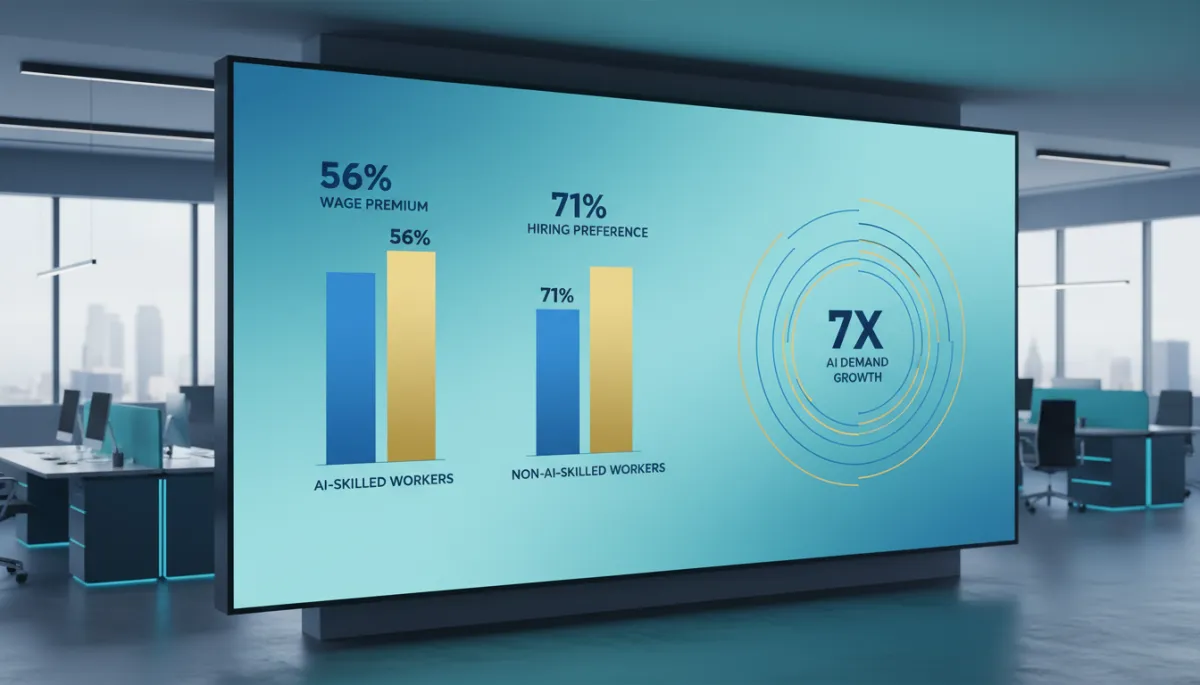
Wage premiums and hiring preferences are consistently higher for AI-fluent talent.
9. Conclusion: Come to the Table Ready
Deloitte’s recent research shows that about 70% of workers are open to offloading parts of their work to AI so they can focus on more creative, human tasks. That’s the heart of the future of work: not humans versus AI, but humans who know how to make AI more valuable.
In 2026, the highest salaries and the best opportunities go to people who can say, and prove: “I use Claude AI to deliver better results, faster, and more reliably.” As one workforce trends report from Gloat and Korn Ferry puts it, the real AI skills gap isn’t about tools—it’s about people who know how to integrate those tools into everyday work.
For contractors and businesses in Albany, and for the new hires who want to join them, the message is simple: in 2026, the winners are the ones who elevate the human element with AI, not replace it. Claude AI is the platform where that human-AI collaboration happens at scale.
Whether you’re hiring or hoping to be hired, it’s time to come to the table ready—Claude skills in hand.
10. Sources
- McKinsey Workforce Research 2025 – “Agents, robots, and us: Skill partnerships in the age of AI”
- PwC Global AI Jobs Barometer 2025 – Global findings on wage premiums and AI-exposed industries
- Microsoft / LinkedIn Work Trend Index – AI at Work 2025–2026 global survey
- NACE Job Outlook Spring 2026 – Employer expectations for entry-level candidates and AI skills
- HUB International / Anthropic Press Release, Feb 2026 – Claude AI deployment results and productivity gains
- World Economic Forum, Future of Jobs Report 2025 – Changing skills and AI exposure metrics
- Gloat AI Workforce Trends 2026 – Skills-based hiring and AI aptitude insights
- Lightcast AI Skills Report – Wage premiums and demand for AI-related skills
- Korn Ferry TA Trends 2026 – Talent acquisition shifts toward AI fluency and skills-based hiring
- Computerworld AI Skills 2026 – Employer expectations and training approaches for AI-literate staff
